



A fatty bulge at the base of the neck, often called a “buffalo hump,” is frequently viewed as a simple cosmetic problem. However, medical experts warn that this physical feature can sometimes be a sign of deeper health issues.
As many people deal with poor posture, weight gain, and long-term medication use, doctors are highlighting the various causes and treatments for this often misunderstood condition.
What Exactly is a Buffalo Hump?
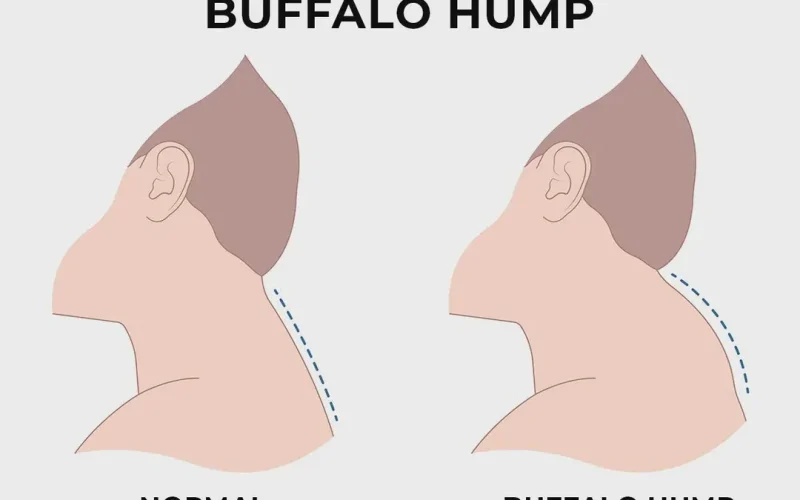
Dr. Dahlia Rice, a plastic surgeon in Chicago, defines a buffalo hump as a “fullness” or fat deposit located at the base of the neck or the upper back.
While it often looks like a simple pocket of fat, its appearance can be affected by:
- Posture: Leaning the head forward or rounding the shoulders can make a hump look much larger than it actually is.
- Weight: General weight gain is a common factor, though not the only cause.
- Medical Conditions: In some cases, it can be a symptom of Cushing’s syndrome (a disorder caused by too much cortisol) or a side effect of long-term steroid use.
Fat vs. Bone: Knowing the Difference
It is important to distinguish between a “true” buffalo hump and a “dowager’s hump.”
- Buffalo Hump: Usually feels soft and fatty to the touch.
- Dowager’s Hump: Related to the curvature of the spine (bone structure) rather than fat buildup.
Because the causes are different, the treatments are also very different. Structural issues usually require physical therapy, while fatty deposits might require medical or cosmetic intervention.
When Should You See a Doctor?
If a hump appears suddenly or grows quickly, experts recommend seeking a medical evaluation. Dr. Rice and Dr. Rachel Mason suggest watching for “red flag” symptoms that might point to a hormonal or endocrine disorder:
- Muscle weakness or constant fatigue.
- Changes in blood pressure.
- Easy bruising or purple stretch marks on the skin.
Treatment Options
The right treatment depends entirely on the root cause:
- Posture-Related: Physical therapy and exercises to strengthen the upper back.
- Medication-Related: A doctor may adjust your prescriptions if they are causing fat redistribution.
- Cosmetic: For localized fat without an underlying disease, procedures like liposuction can help contour the area.
Key Takeaway: While maintaining a healthy weight and good posture can reduce your risk, any unusual growth at the base of the neck should be checked by a professional to rule out hidden health conditions.